Why Corrugated Metal Pipe Remains a Top Choice for Drainage and Culvert Projects
When I first started working in infrastructure and road construction, I quickly learned that the materials you choose for drainage systems can make or break a project. Over the years, I have seen many engineers and contractors debate between concrete, plastic, and steel options for culverts and stormwater management. One material that consistently proves its value is corrugated metal pipe. It offers a balance of strength, flexibility, and cost-effectiveness that is hard to beat, especially when you need reliable performance under heavy loads and variable ground conditions.
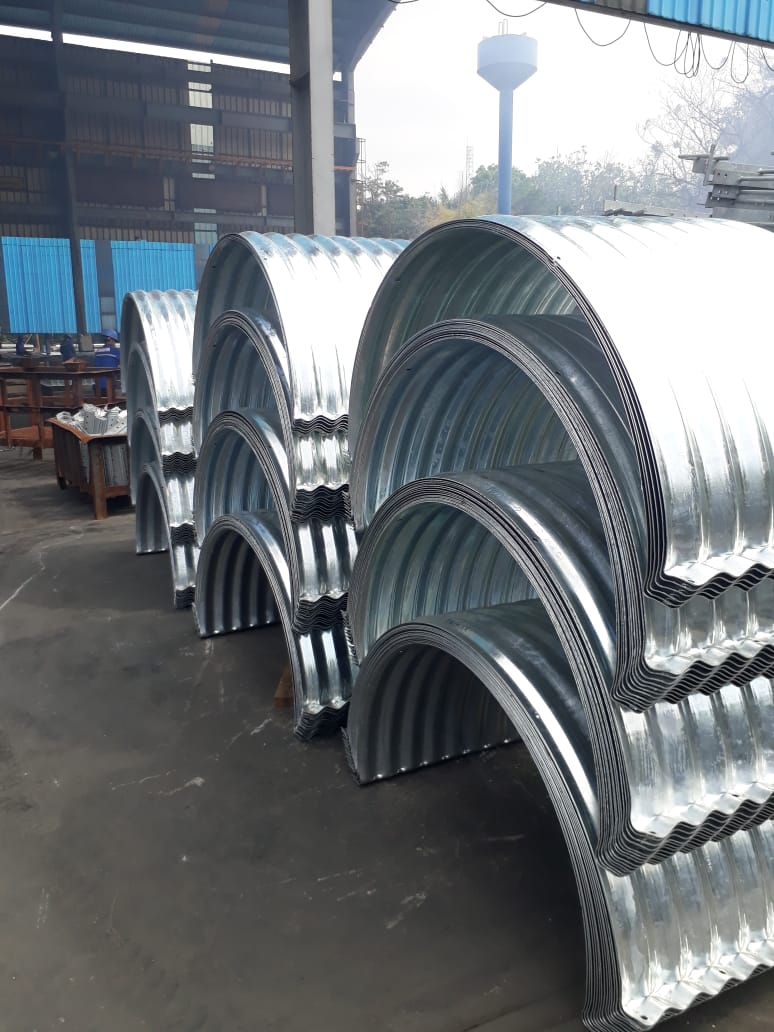
In this article, I want to share some practical insights about corrugated metal pipe from my own experience and from working with manufacturers like PT Primari Inrahm Utama. Their fabrication plant in Bekasi produces galvanised steel pipe that meets SNI and TKDN standards, which matters a lot for projects that require certified quality and local content. I have visited their facility and seen firsthand how steel coil is transformed into finished drainage pipe. The process is precise, and the attention to detail in hot-dip galvanising ensures the pipe can handle decades of exposure to moisture and soil chemicals.
What Makes Corrugated Metal Pipe So Effective
The key to understanding why corrugated metal pipe works so well lies in its structure. The corrugation profile adds stiffness to the pipe wall without adding a lot of weight. This means you can have a large pipe diameter with a relatively thin wall thickness, and still get impressive load-bearing capacity. When a culvert is buried in an installation trench under a road, the surrounding soil and the pipe work together to distribute the load. The corrugations allow the pipe to flex slightly under pressure, which actually helps it resist deformation better than a rigid pipe would.
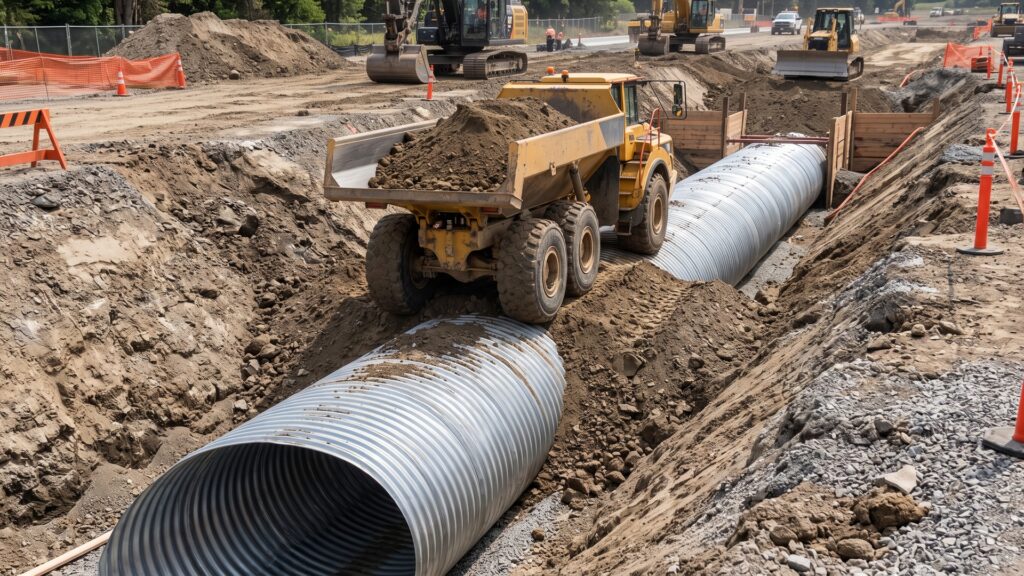
I recall a project where we needed to replace a failing concrete culvert under a busy highway. The original concrete pipe had cracked because of poor bedding and heavy truck traffic. We switched to a corrugated metal pipe with a thicker wall thickness and proper backfill, and it has been performing well for over a decade. The flexibility of the steel meant that minor ground movements did not cause cracks, and the galvanised coating prevented rust. That experience cemented my trust in this product for bridge culvert applications and stormwater management systems.

Understanding the Manufacturing Process
One thing that surprises many people is how much engineering goes into making a simple-looking drainage pipe. At a plant like PT Primari Inrahm Utama, the process starts with high-quality steel coil. The steel is fed through a machine that forms the corrugation profile and then curls it into a pipe shape. The longitudinal seam is welded or locked to create a continuous tube. After that, the pipe goes through hot-dip galvanising, where it is dipped in molten zinc to form a protective coating. This coating is what gives galvanised steel pipe its long life, even in corrosive soils.
I have seen gorong-gorong (the Indonesian term for culvert) produced with various diameters, from small ones used for farm drainage to massive pipes that handle major river flows under roads. The ability to customise pipe diameter and wall thickness is a big advantage. It means you can match the pipe exactly to the hydraulic and structural requirements of your site, rather than being stuck with standard sizes that might be too big or too small.
Standards and Certification Matter
In infrastructure work, you cannot just trust that a pipe is strong enough. That is why certifications like SNI and TKDN are important. SNI is the Indonesian national standard that ensures the product meets specific quality and safety requirements. TKDN certifies the level of domestic content, which is often a requirement for government-funded projects. When a manufacturer like PT Primari Inrahm Utama holds both certifications, it gives engineers and contractors confidence that the corrugated metal pipe they are installing has been tested and meets stringent criteria. I have seen projects delayed because the client demanded TKDN-certified materials, and the supplier could not provide them. Having a local source with the right certifications saves time and eliminates that risk.
Practical Tips for Installation
Even the best pipe will fail if it is not installed correctly. Here are a few things I have learned from watching crews in the field:
- Bedding preparation: The installation trench must be dug to the proper depth and width. A firm, well-compacted base is critical. If the soil is soft, you may need a granular bedding layer to distribute the load evenly.
- Backfill material: Use clean, granular soil or crushed stone around the pipe. Avoid large rocks or organic material that could create voids or cause corrosion. The backfill should be compacted in layers, not dumped in all at once.
- Alignment and slope: Check that the pipe has a consistent slope for drainage. A sag or dip will collect water and debris, leading to blockages and premature failure.
- Connection joints: Make sure the coupling bands or gaskets are properly seated. Leaks at joints can undermine the road base and cause erosion.
- Load considerations: For deep fills or heavy traffic loads, consider structural plates or a thicker wall thickness. The load-bearing capacity of corrugated metal pipe is well-documented, but you need to select the right class for your specific conditions.
I have found that taking the time to do these steps right pays off. A well-installed culvert can last fifty years or more with minimal maintenance.
Comparing Corrugated Metal Pipe to Other Materials
Concrete pipe is heavy and requires heavy equipment for handling. It is also prone to cracking if the bedding shifts. Plastic pipe is lightweight and resistant to corrosion, but it has lower stiffness and can deform under high loads, especially in hot weather. Corrugated metal pipe sits in a sweet spot. It is lighter than concrete, so it is easier to transport and install, but it has much higher strength than plastic. The galvanised coating protects against rust, and if you need extra durability, you can specify a polymer coating or thicker galvanising.
For road construction and bridge culvert projects, I often recommend corrugated metal pipe because of its proven track record. It handles the dynamic loads from traffic better than rigid pipes, and it is less likely to be damaged during installation. I have seen crews accidentally drop a concrete pipe and crack it, while a steel pipe might just get a dent that does not affect performance.
Stormwater Management and Environmental Considerations
Stormwater management is becoming more important as urban areas grow and rainfall patterns change. Corrugated metal pipe is an excellent choice for detention systems, outfall lines, and large-diameter culverts that need to move a lot of water quickly. The smooth interior of the pipe, especially when lined, provides good hydraulic efficiency. For environmentally sensitive areas, some manufacturers offer pipes with coatings that reduce leaching of metals into the soil. The hot-dip galvanising process itself uses zinc, which is a natural element, and modern plants have controls to minimise waste.
I appreciate that PT Primari Inrahm Utama produces its gorong-gorong in Bekasi with a focus on quality and local content. That means the supply chain is shorter, which reduces transportation emissions, and the company can respond faster to project needs. When I specify materials for a project, I always consider the full lifecycle, not just the initial cost. A pipe that lasts longer and requires less maintenance is almost always a better investment.
Final Thoughts from the Field
Choosing the right drainage pipe is not just about picking a product off a shelf. It requires understanding the site conditions, the loads, the hydraulic demands, and the long-term maintenance plan. Corrugated metal pipe has been a workhorse in civil engineering for over a century, and it continues to evolve with better coatings, stronger steel, and more precise manufacturing. Whether you are working on a small farm road or a major highway interchange, this material deserves serious consideration.
If you are involved in infrastructure planning or procurement, I recommend visiting a fabrication plant to see how the pipe is made. Talk to the engineers about pipe diameter options and wall thickness. Ask about certifications like SNI and TKDN. The more you know about how the pipe is produced and tested, the better decisions you will make for your projects. In my experience, the time spent understanding the product pays off in fewer callbacks and longer service life.